Palacio del Marqués de Dos Aguas
Eighteenth-century palace with an alabaster façade by Hipólito Rovira, nineteenth-century state rooms, and three ceremonial carriages.
- Opening hours
- Tue-Sat 10:00-14:00 and 16:00-20:00; Sun and public holidays 10:00-14:00; Mon closed
- Where
-
Calle Poeta Querol, 2, 46002 València
Valencia
See it on the map ↗ Get directions ↗
What you will see
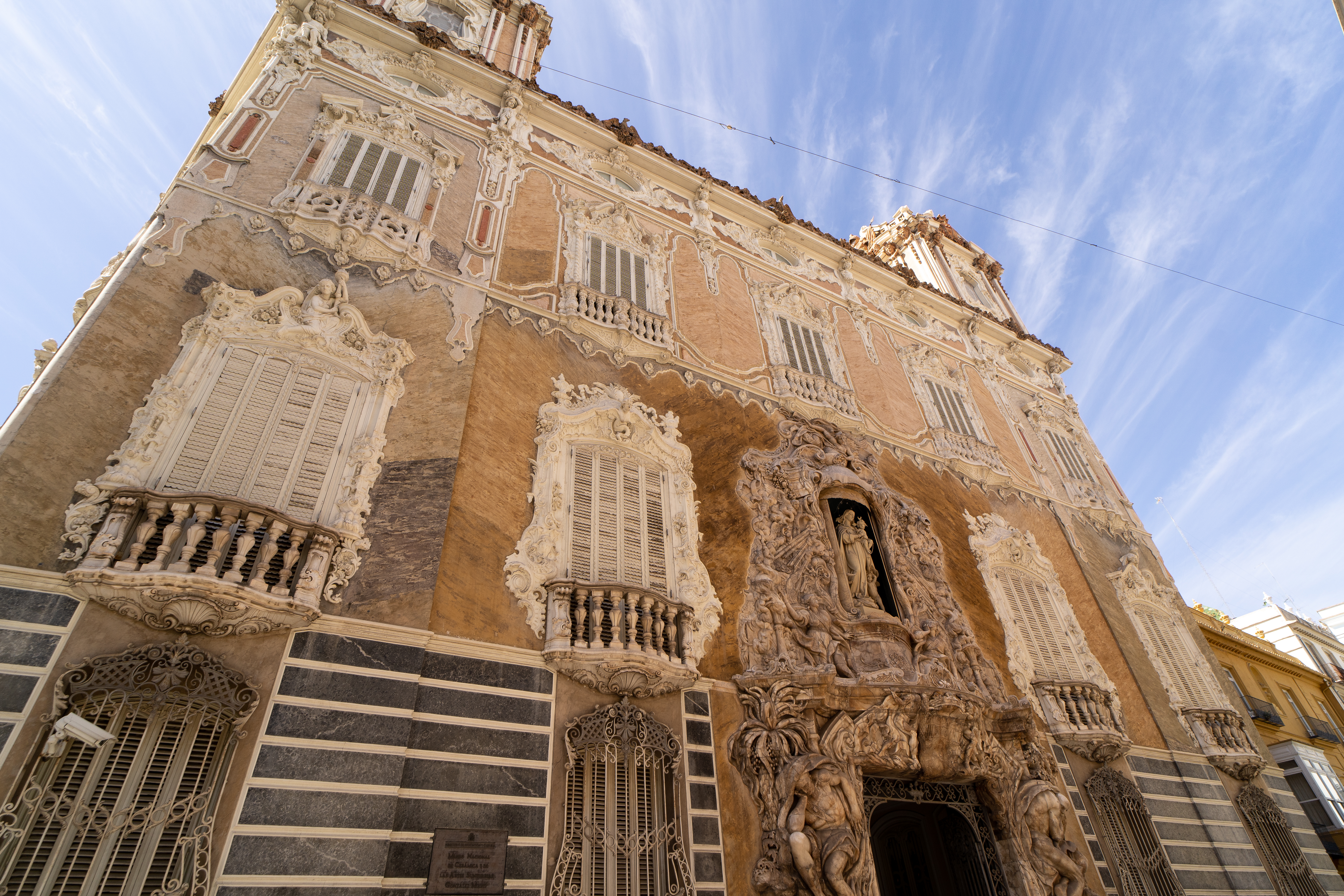
The palace was the home of the Rabassa de Perellós family: in 1496 Giner Rabassa de Perellós acquired the lordship that gave rise to the barony of Dos Aguas, and in 1699 the barony was elevated to a marquessate. Its current appearance comes from two renovations. Around 1740 the III Marquis commissioned the renovation from Hipólito Rovira, and the alabaster façade was created by Rovira, Ignacio Vergara and Luis Domingo. Between 1854 and 1867 Vicente Dasí Lluesma thoroughly reformed the interior, mixing rococo, neo-empire and Chinese motifs. It was declared a historic monument in 1941, and between 1969 and 1972 a new wing was added that repeats the style of the nineteenth-century façade.
Ground floor
The façade features atlantes, mythological figures and the Virgin of the Rosary. The entrance courtyard has terracotta reliefs, attributed to José Nicoli, with allegories of the Arts, Agriculture, Commerce, Science, Letters and Navigation. Below are three vehicles on display: the Carroza de las Ninfas (1753), designed by Rovira and sculpted by Vergara; the carriage of the Marquis of Llanera, from around 1800; and an eighteenth-century sedan chair. The main staircase, from the nineteenth century, was lowered and the old dome left hidden.
Noble floor
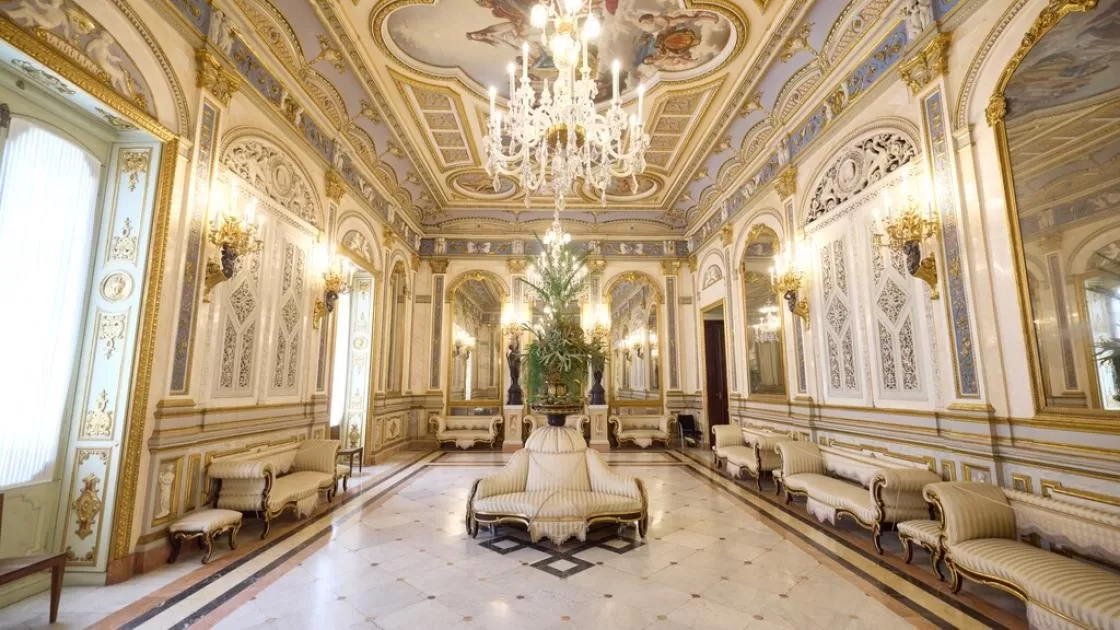
Upstairs are the state rooms: the Hall of Illustrious Persons, the Chinese Room, the dining room, the smoking room, the antechamber, the bedrooms and the Ballroom, which is the main room. On the second floor the eighteenth-century vault painted by Rovira is preserved, with sculptures by Vergara representing the four continents with animals: horse, lion, caiman and elephant.
Inside the palace is the Museo Nacional de Cerámica González Martí, which has its own entry.
Cost
The palace is visited with admission to the Museo Nacional de Cerámica: €3.00 general admission and €1.50 reduced. Currently, and until 10 December, admission is free due to restoration and protection works on the façades. For the rest of the year it is free on Saturdays from 16:00 and on Sundays.
Opening hours
Tue-Sat 10:00-14:00 and 16:00-20:00. Sun and public holidays 10:00-14:00. Mon closed all year. The museum notes that some rooms may be closed due to lack of security staff.
How to get there
The ticket office and main entrance are on Calle Cultura, 6; there is ramp access via Poeta Querol, 2. The museum indicates Colón metro station.
Worth it if…
…you are interested in eighteenth and nineteenth-century architecture and decoration, or want to see state carriages and palace rooms in the same building as the Museo Nacional de Cerámica.